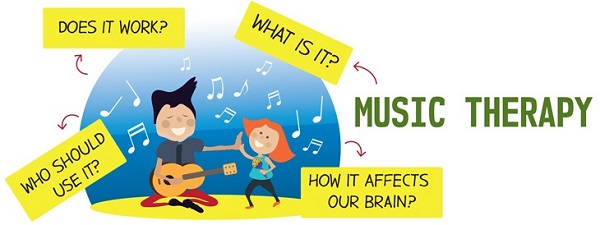
WELCOME TO OUR MUSIC THERAPY SERVICE
Here are some steps to get better results :
1 . Fill up the required fields
2 . Click on submit
3 . We will provide you a suitable raga
4 . We will also provide you the music to listen for the particular raga
5 . Listen to the music continously for 20 minutes
6 . Make sure your age is between 15-40 years
7 . Make sure you are under calm environment
Methodology
Music Selection
Considering the deep impact of Indian Ragas, a total of such ragas are considered for this study. These ragas distinguish themselves in pitch, bass, treble and an overall rhythm. The time of day is not taken in practice as the effect of day clock on the patient through music is negligible, which is a ground known assumption here. Also the order of ragas is determined by the pitch of music only and in the ascending order.Patient Attributes
. In this analysis the patient attributes are also to be mathematically construed, hence only the highest impacting parameters are noted and studied.These parameters are stated to help categorize new patients and their inclination towards a music when diagnosed with the same disease.The parameters are as follows:
1. Age: Age wise segregation is important to accurately determine the mental illness prevalent in the patient. For example, adults are diagnosed with chonic depression on a large scale whereas children are victims of anxiety.
2. Gender: The gender of patient determines the psychological response to music. To illustrate, males are generally observed to like high pitched songs while women prefer melodies.
3. Time: According to the timings evening,night or morning,the patients results changes and are observed practically.
Clustering Algorithms Used
Finally the attributes are feed in the database and results are displayed according to the clustering algorithms (both algorithm gives accurate results)OUR APPROACH FOLLOWS THE FOLLOWING STEPS:
• Step 1: Ragas are collected and a mathematical model of ragas are collected.• Step 2: Patients or subjects are checked and their mental illness and physical attributes are noted.
• Step 3: Since it was observed that the number of hidden layers over 12 nos do not put significant change in the overall result, it was determined that 12 is the optimum number of hidden layers.
• Step 4: The output or the effect of songs on patients was calculated on the basis of mood,timings,age and gender.
• Step 5: Effect of every raga on the patient was noted down with respect to the value of his mood,timings,age and gender.
• Step 6: Finally, the data was fed to the clustering engine in tabular format.
• Step 7: The network was trained with the data sets and the clustering is observed.